POWERTROL
Steam conditioning500
Our efficient valves in the field of steam conditioning and cooling for demanding applications and the highest safety standards.
Details
- Series 500
- DN 15 – DN 800 / ½“ – 32“
- PN 16 – PN 400
- ANSI Class 150 – 2500
- Temperature range -10 °C to 650 °C
The POWERTROL family solves the versatile and increasing requirements for steam conditioning and cooling with a flexible design principle and maximum efficiency. Our modular system and its variety of products offers the right concept for every steam cooling application. Starting with the classic seat or stem injection up to the high-tech steam assisted nozzle. The more flexible mode of operation of modern power plants, with increasing demands on temperatures, pressures and further developments in power plant technology, is answered by the continuous expansion of the performance of our trims and valve housings of the steam-conditioning stations. The perforated cages are calculated and executed according to the flow conditions as well as the required noise level and rangeability. The housing of our valves in the field of steam conditioning is modelled and manufactured according to the latest state of the art and production processes – this way, the high-performance solutions always meet all requirements for higher temperature gradients during start-up and for the service life due to thermal fatigue. For safety applications, a dirt strainer is connected upstream in the steam inlet. This prevents the ingress of foreign particles and protects against defects. POWERTROL stands for maximum control performance in steam conditioning with unique service and maintenance convenience.
This is what distinguishes POWERTROL control valves:
- Powerful valve actuator
- Multifunctional positioner
- Flexibility thanks to ARCA modular system
- Robust precision trims
- Large number of variants for steam conditioning and cooling
- Precise temperature control
- Steam conditioning station in globe type, angle type and Z-shape
Product inquiry
Designs
-
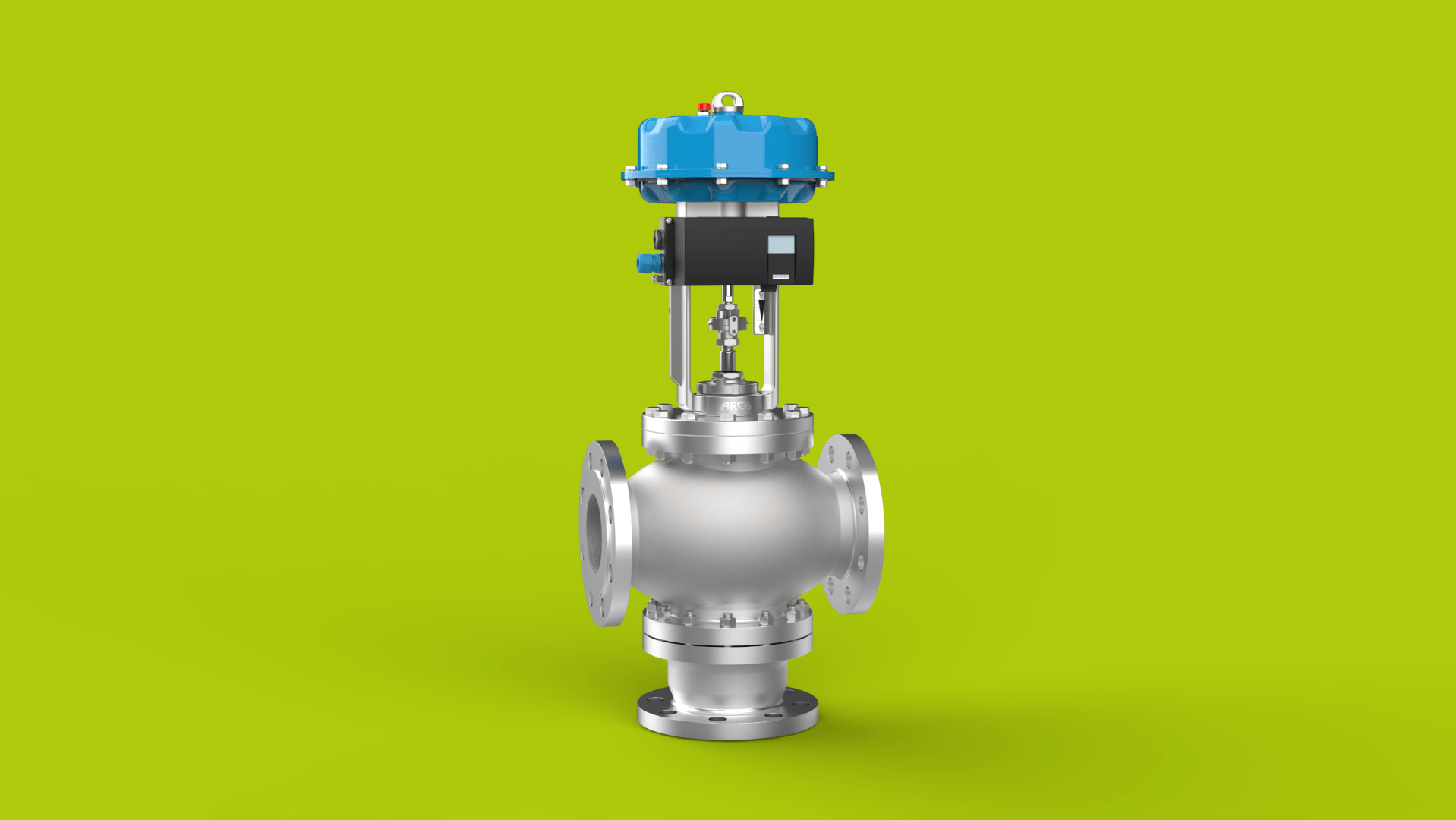
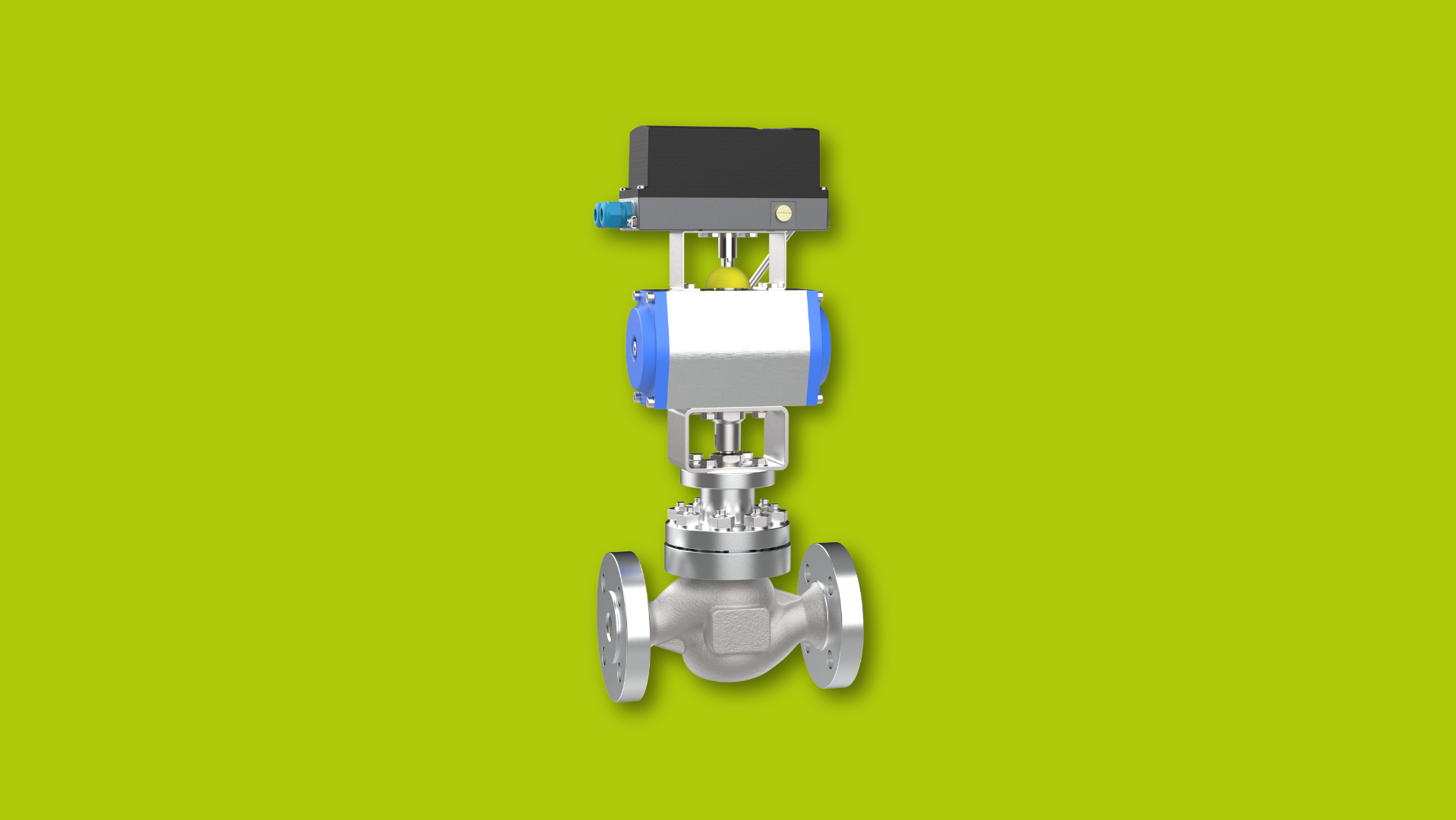
Globe design with seat injection (type 520)
This steam conditioning valve is based on our cast straight-way housing from the basic control valve series. Combined with the lower seat injection, it is optimized for simple cooling applications. The pressure is reduced in the perforated plug/perforated seat combination and at the same time water is injected for cooling by means of a nozzle. The differential pressure via the nozzle and the turbulence in the plug chamber help to ensure that most of the cooling water evaporates even before it exits into the pipeline.

-
Globe design with stem injection (type 510)
With this steam conditioning valve, a hole pattern is uncovered by the hollow stem depending on the volumetric steam flow and injection takes place directly into the intermediate space of the pressure reduction. The greatest turbulence prevails in this intermediate space of the perforated plug/perforated seat combination, as the flow cross-section is reduced to the required amount of steam. This ensures optimum evaporation of the injection water even with high rangeabilities and protects the valve housing against direct contact with water. The cast standard valve can be combined either with flanges or considering the expansion of steam by reducing the pressure with butt-welding expansions.
-
Single-phase nozzle (type 596)
Superheated steam is cooled in a simple way with this single-phase nozzle. It is used with a sufficiently high injection water pressure and continuous steam quantity. The amount of cooling water is controlled by the interaction between the single-phase nozzle and the cooling water control valve (in this case an ECOTROL®), which are matched to each other. The flexibility and the number of nozzles allow use in many applications.
-
Mini cooler (type 595)
The mini cooler is based on the single-phase nozzle and is used in steam-conditioning stations with very small injection water quantities. Following the pressure reduction, the injection water is added to a perforated seat cage, where maximum turbulence ensures optimal evaporation conditions. The perforated seat cage also protects the valve housing against direct contact with injection water. The valve housing can optionally be equipped with a condensate drain connection.
-
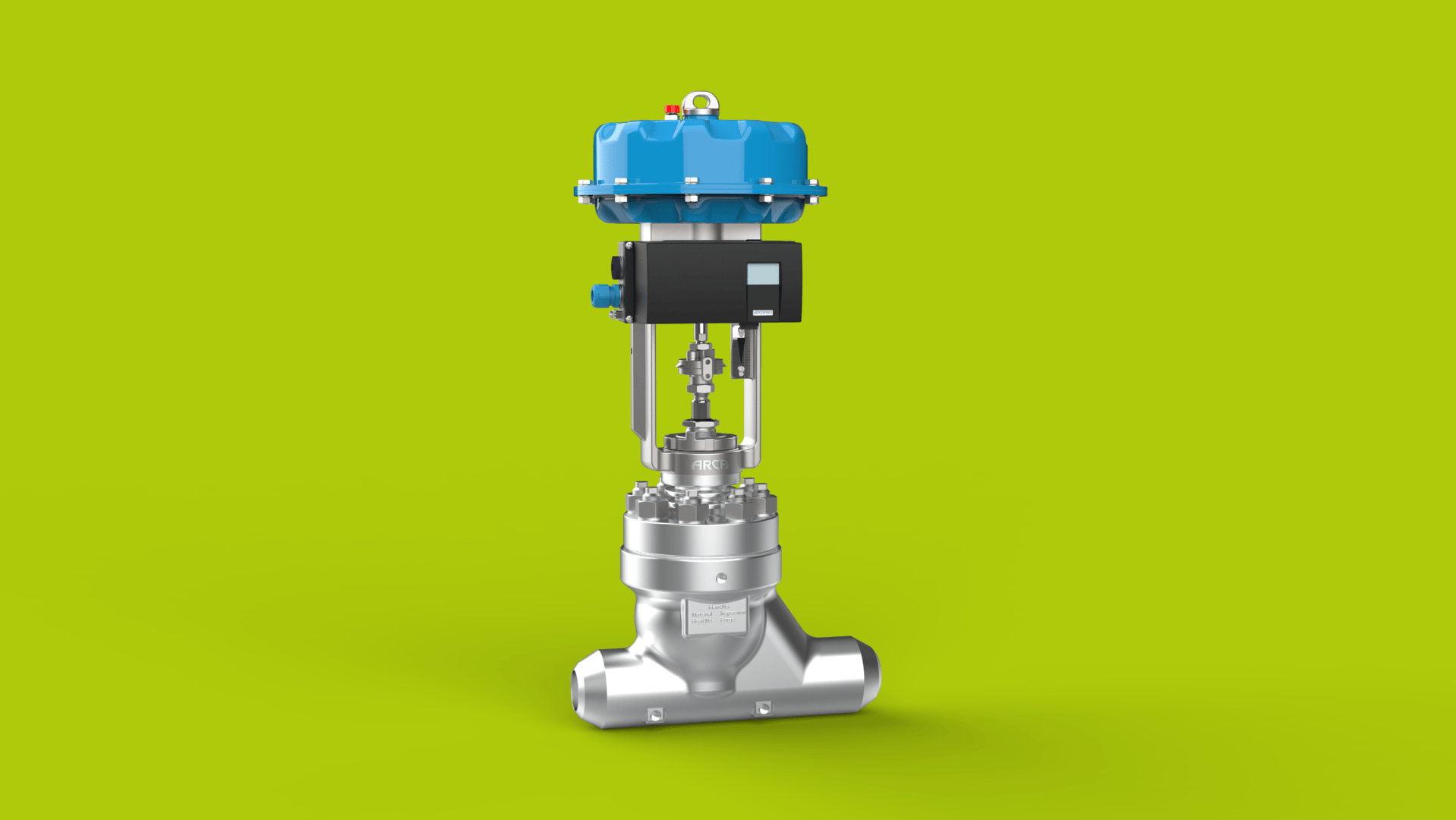
Angle design with stem injection (type 550/570)
These flow/sound-optimized steam valves in an angle design are based on cast and forged angle housings with welded ends and can be expanded as required in the outlet and equipped with the desired connections. The stem injection enables a controlled pressure reduction and, if necessary, prevents or reduces cavitation at the injection water control valve. The multi-stage trim provides subcritical pressure reduction and, in the outlet, the perforated discs adapted to the process further reduce the sound level.
-
Angle design with two-phase nozzle (type 560/580)
The two-phase nozzle is the ideal solution if the temperature difference between the injection water and the live steam is very large, or if the injection water pressure is low, or if a wide range of operating load cases must be regulated. The injection water is drawn in by the live steam according to the injector principle and atomized with the motive steam at the intermediate stage. Thus, small evaporation distances can be realized even without turbulence due to perforated plug/perforated seat combinations. The bonnet is available as a bolted design or as a self-sealing bonnet (Brettschneider design).
-
Desuperheater (type 3)
Desuperheaters are single-phase nozzles connected in series, which are activated one after the other depending on the injection water requirement, wherein the required differential pressure at the individual nozzle remains almost constant and an optimal spray pattern is generated. Due to the rotary movement and nozzle control, the cooling water is always injected in the middle of the pipeline, regardless of the amount of water. In addition, the packing does not draw any foreign substances or dirt into the cooler. The design of the ball/seat ring system and the hollow stem avoids fatigue fractures and leaks at the nozzle. A patented three-stage pressure reduction significantly reduces wear on the nozzle and prolongs the lifetime and service life of the valve.
-
Globe design with two-phase nozzle
Motive steam cooling is used in applications with valves in straight-way design and critical, demanding cooling. From an intermediate stage of the perforated plug/perforated seat combination, a partial flow is extracted as motive steam and fed directly through the auxiliary passage into a steam assissted nozzle or a motive steam cooler. The required on/off valve for regulating the motive steam thus becomes superfluous.


Frequently Asked Questions – POWERTROL Steam Conditioning Valve
What is the POWERTROL steam conditioning valve, and what is it used for?
The POWERTROL steam conditioning valve is a high-performance control valve from ARCA’s Series 500 that reduces both the pressure and the temperature of superheated steam in a single piece of equipment. The steam is throttled while water is injected, so that the valve outlet delivers saturated or slightly superheated process steam at the required quality. Main applications are steam conditioning and desuperheating in power plants, industrial steam systems, and turbine bypass duty, where the highest safety and efficiency standards apply.
Which pressure ratings, sizes and temperatures does the POWERTROL valve cover?
POWERTROL covers a very wide operating envelope: nominal sizes from DN 15 to DN 800 (½″ to 32″), pressure ratings from PN 16 to PN 400 / ANSI Class 150 to Class 2500, and a temperature range from –10 °C to +650 °C. This spans applications from small industrial steam systems to high-pressure large-scale power plants.
Which valve configurations and injection systems does POWERTROL offer?
The POWERTROL family is modular and covers all practical injection concepts: in-line body with seat-injection (Type 520), in-line body with stem-injection (Type 510), angle body with stem-injection (Type 550/570), angle body with two-fluid nozzle (Type 560/580), single-fluid nozzles (Type 596), mini desuperheaters (Type 595), separate desuperheaters (Type 3), and an in-line body with two-fluid nozzle. A Z-body version is also available. The right concept can therefore be selected for every combination of steam flow rate, steam pressure and temperature, and cooling water pressure.
When is a two-fluid (atomising) nozzle used?
Two-fluid nozzles are used when the steam flow rate varies over a wide range, the cooling water pressure is restricted or where the available evaporation path is short. A motive-steam jet atomises the cooling water into very fine droplets so that they evaporate quickly and completely. The result: short evaporation distances, high control accuracy even at low loads, and no droplet carry-over into the downstream piping – ideal for the flexible operating modes of modern power plants.
How does POWERTROL minimise noise and vibration?
The trim uses perforated throttling elements and cage-plug/cage-seat combinations that split the flow into many small jets, significantly reducing the sound pressure level. Multi-stage pressure-reduction concepts, customised hole patterns and low-noise cages are engineered specifically to the flow conditions, the required sound level and the rangeability. POWERTROL therefore meets even the strictest noise regulations in power plant environments.
How accurately can the outlet temperature be controlled?
The POWERTROL design enables precise and stable outlet temperature control across the full load range. The injected water is metered through a separate spray water control loop. Combined with ARCA’s intelligent positioners (ARCASMART, ARCAPRO®), set-point deviations of just a few Kelvin can be maintained even under varying load conditions.
Which safety-related design options are available?
For safety-relevant duty, POWERTROL can be supplied with a SIL-compliant quick-closing function. A strainer can be integrated on the steam inlet to keep foreign bodies out of the system and protect both the trim and downstream components from damage. Optionally, bellows-sealed stems, redundant end-position monitoring and safety-rated pilot equipment (solenoid valves, boosters) can be added.
Which body materials can be selected?
For typical operating temperatures, cast steels and creep-resistant forged steels are available – from cast carbon steel 1.0619 / A216 WCB for moderate temperatures to creep-resistant grades 1.7357, 1.7379 or 1.4931 / A217 WC9, A217 C12A for superheated steam, all the way to special grades for high-pressure service. Material selection is made case by case, taking into account temperature gradients, cyclic loading and required service life.
Which actuator options are available?
Pneumatic diaphragm actuators (Series 812 and 811) are used as standard, providing high actuating forces and fast response times with a specified fail-safe position. Pneumatic piston actuators (Series 814 or 812 DWK) as well as electric and electrohydraulic actuators are available as options. Quick-closing functions, spring-return action and double-acting configurations can be combined to suit the safety requirements.
Which positioners and diagnostics are recommended?
For demanding steam conditioning duty, the digital ARCAPRO® positioner with extensive diagnostic and communication capabilities (HART®, PROFIBUS PA®, FOUNDATIONTM FIELDBUS) is recommended. Travel, thrust, valve signature and stroking behaviour can be continuously monitored, enabling predictive maintenance and maximum plant availability.
How does the POWERTROL valve cope with thermal fatigue?
The body is engineered to handle high temperature gradients during start-up and cyclic thermal load. Special wall-thickness modelling, optimised transition radii, qualified materials and a proven body design provide long service life even in modern, flexibly operated power plants with frequent start/stop cycles.
What does the mini desuperheater (Type 595) offer, and when is it used?
The Type 595 is a compact desuperheater for small flow rates. It is used wherever installation space is limited or where small partial steam streams have to be conditioned – for example in auxiliary systems, heating lines or small industrial turbines. Despite its compact design, the mini desuperheater achieves high control accuracy and short evaporation distances.
What are typical POWERTROL applications?
Typical applications include turbine bypass systems, live-steam and superheated-steam conditioning in steam power plants, start-up and bypass stations, pressure-reducing stations for process steam in chemical and petrochemical industries, waste-to-energy plants, pulp and paper, as well as concentrating solar power and biomass plants. In short: wherever live steam needs to be conditioned precisely and safely in temperature and pressure.
Which service offerings and digital tools does ARCA provide?
The full ARCA service portfolio is available for POWERTROL: ARCAlaunch for commissioning including flushing services, ARCAcare for preventive maintenance, ARCAsafe for spare-parts availability, ARCA24/7 for round-the-clock telephone support, as well as theoretical and practical training sessions. Sizing is performed in ARCA-VENA; via the ARCAonsite platform, all documents are accessible by QR code directly at the valve.
Which standards and certifications apply to POWERTROL?
POWERTROL is designed in accordance with the Pressure Equipment Directive 2014/68/EU; the body is engineered to EN 12516-2 / ASME B16.34. Optional designs to AD 2000, ASME B31.1 / B31.3, TRD 110 and SIL-rated quick-closing functions are available.